
Signs a Tree Is About to Fall (And When It Becomes an Emergency)
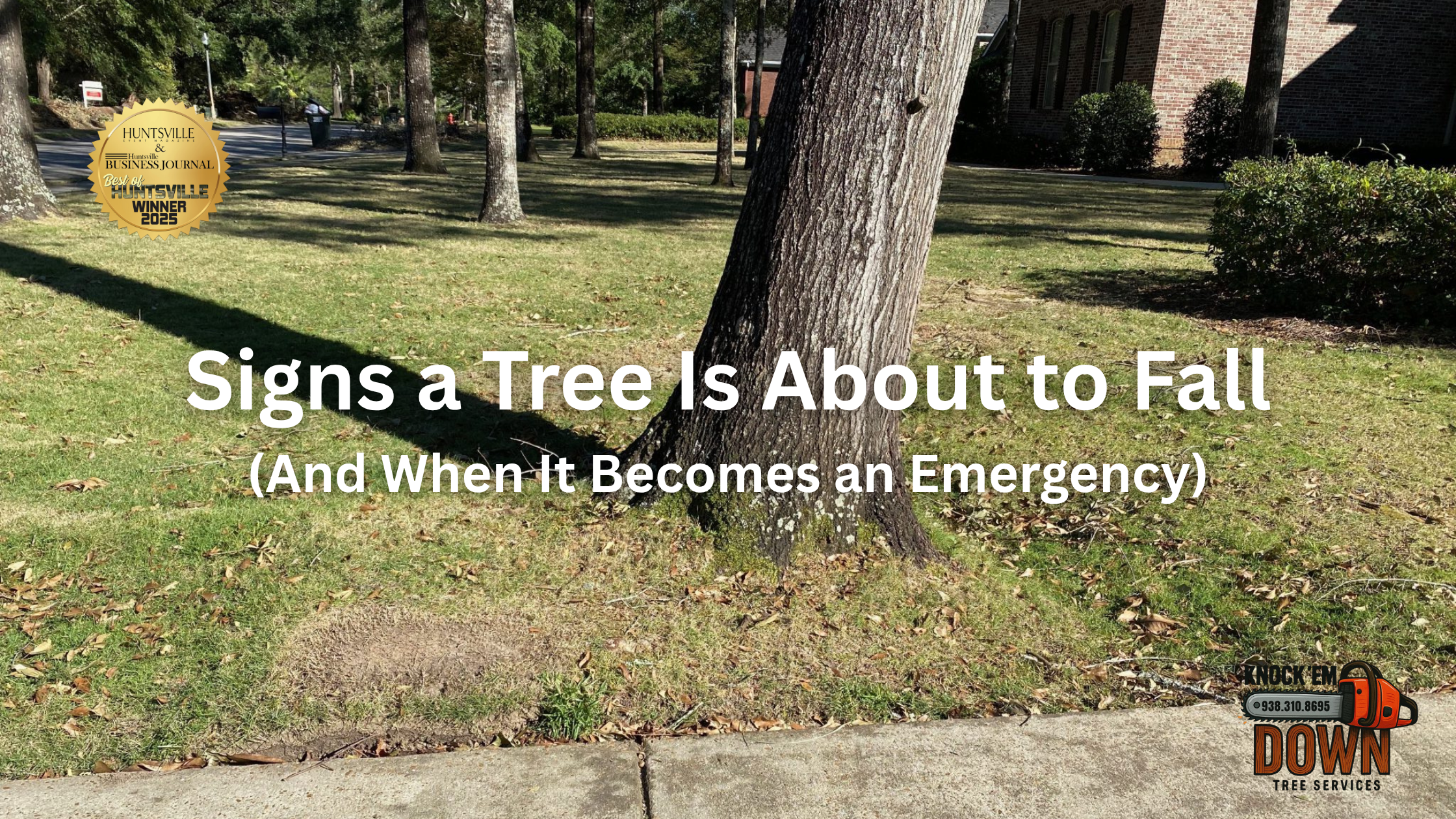
A sudden lean and exposed roots can signal a tree is about to fall.
Most trees don’t fall without warning.
Across Huntsville, Madison, Athens, and Hampton Cove, there are usually clear signs that a tree is becoming unstable before it actually comes down. The problem is, many homeowners don’t recognize those signs until it’s too late.
If you know what to look for, you can act early—and avoid needing emergency tree removal in a dangerous situation.
Leaning That Wasn’t There Before
A slight lean isn’t always a problem. But if a tree suddenly starts leaning after a storm or over time, it can be a serious warning sign.
Pay attention if:
The lean appears quickly
The tree is leaning toward your home or driveway
The ground around the base looks lifted or uneven
Homeowners in Owens Cross Roads and New Market often notice soil shifting around the roots before a tree falls.
Cracks in the Trunk or Major Limbs
Visible cracks are one of the clearest signs that a tree may fail.
These cracks weaken the structure and make it more likely to split under pressure from wind, rain, or its own weight.
If you see:
Deep vertical cracks
Splitting branches
Sections of the trunk separating
It may already be an emergency situation.
Dead or Hanging Branches
Dead limbs don’t just fall straight down—they can break unpredictably during storms or even on calm days.
Look for:
Branches with no leaves during growing season
Limbs that appear brittle or hollow
Large branches hanging over your home or driveway
These are often the first parts of a tree to fail.
Root Damage or Exposed Roots
The health of a tree starts underground.
If the root system is damaged, the entire tree can become unstable—even if it looks fine above ground.
Watch for:
Exposed roots
Soil that appears lifted or cracked
Signs of decay around the base
This is especially common after heavy rain in areas like Hazel Green and Harvest.
The Tree Looks Diseased or Dying
A tree that is already struggling is much more likely to fall.
Signs of disease include:
Fungus growing at the base
Bark falling off
Discolored or thinning leaves
If you’re unsure whether a tree is diseased, you can review signs your tree might be diseased (and what to do about it) to better understand what to look for.
When It Becomes an Emergency
Not every problem requires immediate removal—but some situations do.
Call for emergency tree removal if:
The tree is leaning toward your home
Large cracks are visible in the trunk
Roots are lifting out of the ground
A major limb is hanging over a structure
These are signs the tree could fall at any time.
Don’t Wait Until It Falls
Many emergency situations could have been prevented with early action.
If you notice warning signs, it’s always safer to have a professional take a look. Removing or trimming a tree before it fails is often simpler, safer, and less expensive than dealing with storm damage later.
Knock ’Em Down Tree Service helps homeowners across Huntsville, Madison, Athens, and surrounding areas identify dangerous trees and handle removals safely.
Frequently Asked Questions
What is the biggest warning sign a tree is about to fall?
A sudden lean combined with soil movement at the base is one of the strongest indicators a tree may fall soon. This often means the root system is failing.
Can a healthy-looking tree still fall?
Yes. Root damage or internal decay isn’t always visible from the outside. That’s why it’s important to pay attention to subtle warning signs like leaning or cracks.
Should I remove a tree before it becomes an emergency?
In many cases, yes. Removing a tree early can prevent property damage and reduce the risk of injury. It’s often more affordable than emergency removal after a fall.
