
That Tree Is Leaning—But Is It Actually Dangerous?
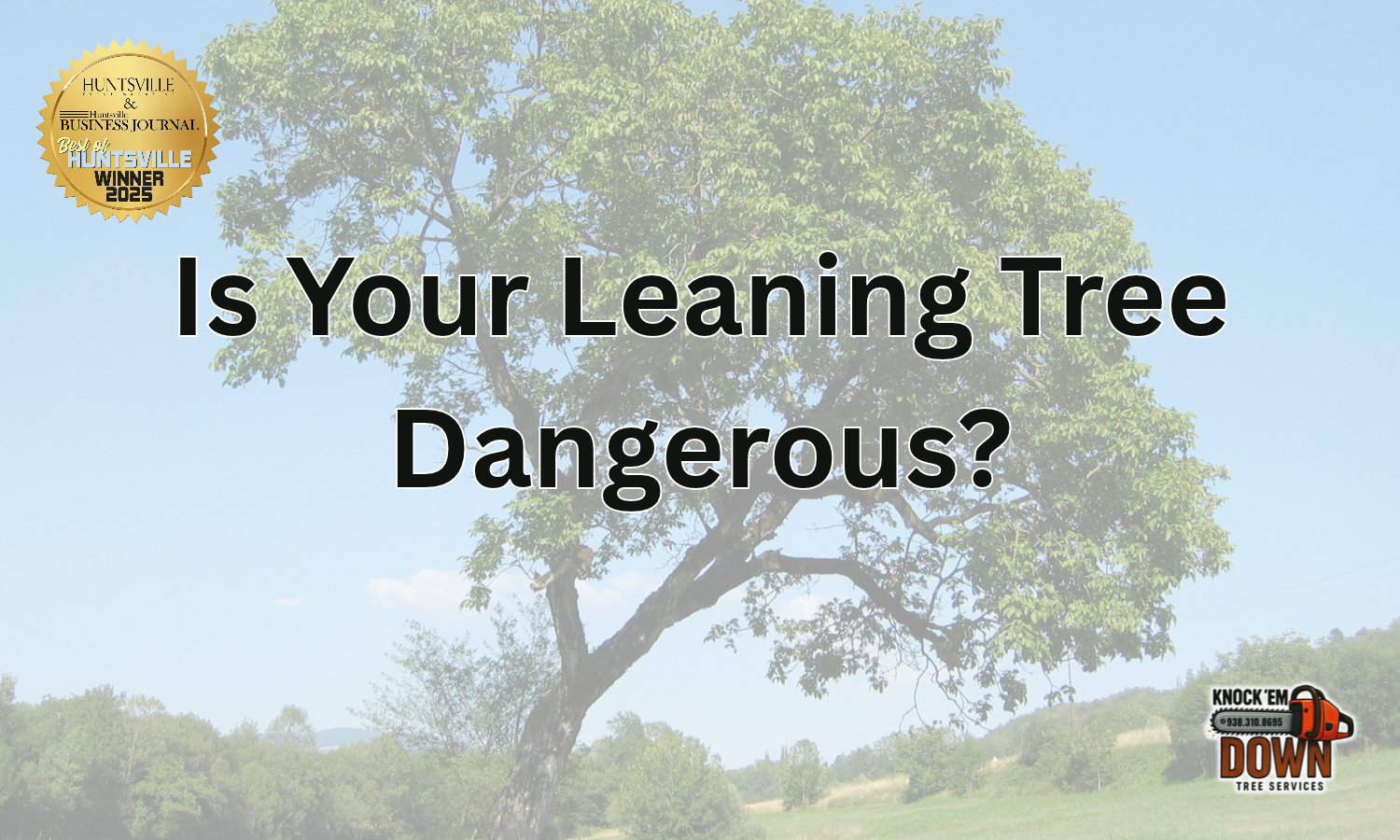
A leaning tree isn't always dangerous, but a new or changing lean deserves a closer look.
You’ve probably seen a tree leaning somewhere and thought, That thing is gonna fall.
But is it?
Here’s the thing: a leaning tree isn’t automatically a dangerous tree. Some trees grow at an angle their entire lives and are perfectly stable. Others start leaning because something has changed—and that’s when you need to pay attention.
The trick is knowing the difference.
If you’ve got a tree leaning toward your house, driveway, fence, or neighbor’s property, don’t panic. But don’t ignore it either.
Let’s look at some of the signs that can tell you when a leaning tree might actually be a problem.
Has the Tree Always Leaned?
This is the first question to ask.
Some trees simply grow that way. They may lean toward sunlight or grow at an angle because of the space around them.
If you’ve lived on the property for years and that tree has always leaned the same direction, that alone may not be cause for concern.
A tree that suddenly starts leaning is different.
If you look outside after a storm and think, Hold up…that tree wasn't leaning like that yesterday, it's time to take a closer look.
A new or increasing lean can sometimes indicate problems with the roots, soil, or overall stability of the tree.
Look at the Ground Around the Base
Don't just look up at the tree. Look down, too.
Check the soil around the base.
Do you see the ground lifting or cracking on one side? Are roots suddenly exposed? Does it look like part of the root system is pulling out of the ground?
Those can be warning signs that the tree is shifting.
Roots are what keep that entire tree anchored. If they're losing their grip, you've got a bigger problem than a crooked trunk.
If you're seeing movement around the root system along with a new lean, it's worth having a professional Huntsville tree service take a look.
Check the Trunk
Next, look at the trunk.
Large cracks, splits, cavities, missing bark, or obvious decay can all affect a tree's strength.
Pay particular attention to damage near the base of a leaning tree. That's where a lot of the stress is being carried.
A little surface damage doesn't necessarily mean the tree is dangerous. But a leaning tree with major trunk damage is something you don't want to shrug off.
That's a combination worth checking.
Look for Dead or Broken Limbs
The lean itself may not be the only issue.
Look up into the canopy and see what's going on with the branches.
Are there large dead limbs? Broken branches hanging in the tree? Is one side of the canopy much heavier than the other?
Uneven weight combined with an already compromised tree can create additional stress.
And don't climb up there trying to get a better look.
If the problem is higher than you can safely see from the ground, leave that part to somebody with the right equipment.
Which Way Is It Leaning?
This matters. A lot.
A questionable tree leaning toward an open part of the yard is one thing.
The same tree leaning over your house is another.
Take a look at what's in the potential path of the tree:
Your house
Your neighbor's house
Vehicles
Driveways
Fences
Sheds or garages
Roads
Utility lines
Areas where people regularly walk or sit
The condition of the tree matters, but so does what it could hit.
That's one reason homeowners searching for tree removal in Huntsville, AL should have the whole situation evaluated instead of making the decision based on the lean alone.
Did the Lean Appear After a Storm?
North Alabama gets its share of strong wind and thunderstorms.
If a tree starts leaning after a storm, pay attention.
Heavy rain can saturate the soil while wind puts pressure on the canopy. If the root system has been damaged or the soil can no longer hold it securely, the tree may shift.
You may notice exposed roots, lifted soil, fresh cracks, or a noticeably different angle.
Don't stand underneath it trying to figure out exactly what's going on.
Give it some space and call somebody who knows what they're looking at.
Does a Leaning Tree Always Need to Be Removed?
No.
And we’re not going to tell you every crooked tree in Huntsville needs to come down.
A tree that has grown at an angle for years and has a healthy trunk and root system may be perfectly stable.
On the other hand, a tree with a new lean, damaged roots, serious decay, or structural problems may need more than trimming.
If removal is necessary, an experienced tree removal service in Huntsville, AL can determine how to safely take the tree down based on its size, condition, location, and what’s around it.
Sometimes the answer is removal.
Sometimes it isn't.
Ain't no sense in cutting down a good tree if it doesn't need to go.
Don't Wait for the Tree to Answer the Question for You
If you've been staring at the same leaning tree wondering whether you should be worried, get it checked.
Especially if something about it has changed.
A tree is a whole lot easier to deal with while it's standing and you can plan how to bring it down.
Once it's laying across your driveway—or worse, your house—you've got a different kind of day on your hands.
Worried About a Leaning Tree? Give Knock 'Em Down a Call
You don't have to stand in the yard trying to decide whether that tree is leaning a little more than it did last week.
Knock 'Em Down Tree Service works with homeowners throughout Huntsville and the surrounding North Alabama area.
We'll take a look at the tree, what's around it, and what you're dealing with. If it needs to come down, we can handle it. If it doesn't, we'll tell you that too.
Give Knock 'Em Down Tree Service a call today for an estimate and let's figure out what needs to happen before that leaning tree becomes a bigger problem.
Frequently Asked Questions
Is every leaning tree dangerous?
No. Some healthy trees naturally grow at an angle and remain stable for years. A new or increasing lean—especially when combined with root movement, trunk damage, or decay—is more concerning.
What should I do if a tree starts leaning after a storm?
Keep people and vehicles away from the area, especially if the tree is leaning toward a structure or frequently used space. Look for obvious changes from a safe distance and have a tree professional evaluate it.
Can a leaning tree be saved, or does it have to be removed?
It depends on why the tree is leaning and its overall condition. A naturally leaning, healthy tree may not need removal at all. Significant root damage, structural weakness, decay, or a newly developing lean may make removal the safer option.
